
The Ultimate Guide to Cleaning Up After a Sewage Leak
Why Immediate Action Matters for Sewage Leak Clean Up
Sewage leak clean up is a serious emergency that puts your health and property at risk. Raw sewage contains dangerous bacteria, viruses, fungi, and parasites that can cause severe illness or even death. Every minute counts when sewage backs up into your home.
Quick Action Steps for Sewage Emergencies:
- Evacuate vulnerable people – Get children under 2, adults over 60, and anyone with respiratory issues or weakened immunity out immediately
- Turn off electricity – Never enter a flooded area until power is safely shut off to avoid electrocution
- Call professionals – Contact certified restoration experts and your insurance company right away
- Don’t touch anything – Assume all surfaces and water are contaminated until properly cleaned
- Wear protective gear – If you must enter, use rubber boots, waterproof gloves, eye protection, and an N95 mask
The greatest danger in a sewage backup isn’t disease—it’s electrocution or explosion from utilities. Never enter a flooded basement or light matches until utility companies shut off gas and electricity.
Time is critical. Untreated sewage causes structural damage, releases toxic fumes, and creates perfect conditions for mold growth. Professional cleanup typically takes as few as 2 days when you act quickly, but delays can extend the process for weeks and multiply your costs.
This guide walks you through the complete sewage cleanup process, from emergency response to final restoration. You’ll learn which items can be saved, how to sanitize safely, and when to call in the experts. For homeowners in Gulfport and Pinellas County, understanding these steps means protecting your family and your property investment.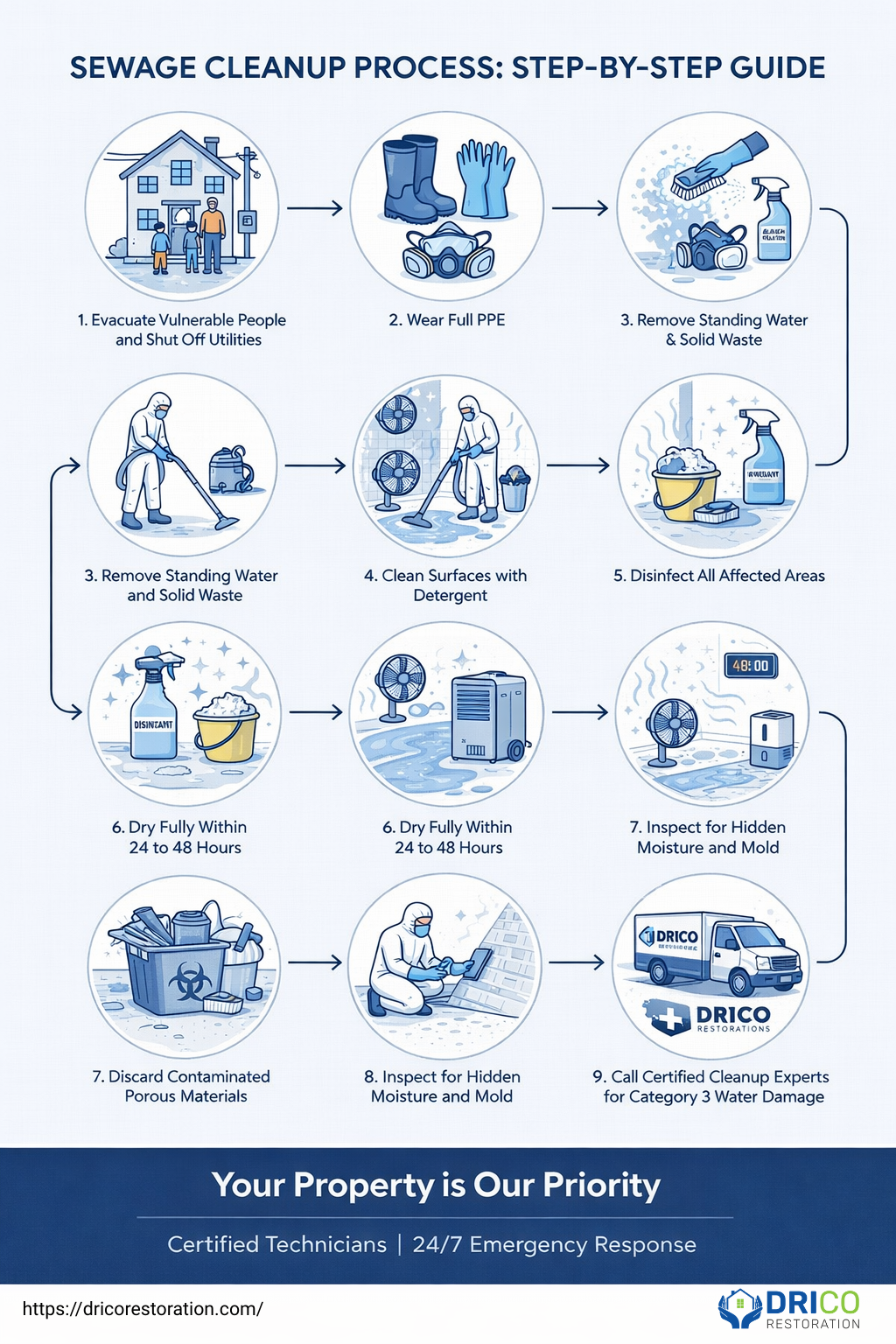
Essential Safety and the Sewage Leak Clean Up Process
When we talk about sewage leak clean up, we aren’t just talking about a messy floor. We are dealing with “Black Water,” or Category 3 water damage. This is water that is grossly contaminated and can contain pathogenic, toxigenic, or other harmful agents.
The biological risks are significant. Raw sewage is a cocktail of bacteria (like E. coli and Salmonella), viruses (such as Hepatitis A), fungi, and parasites. These microorganisms can enter the body through skin contact, accidental ingestion, or even by breathing in contaminated droplets or dust. This is why sewage cleanup is classified as a biohazard.
Beyond the immediate “ick” factor, sewage poses long-term structural risks. Because sewage is viscous and filled with organic matter, it doesn’t just sit on top of surfaces—it soaks into them. Wood studs, drywall, and subfloors act like sponges, pulling the contamination deep into the skeleton of your home. If not addressed by biohazard cleanup experts, these materials can rot and become permanent breeding grounds for dangerous pathogens.
Immediate Steps for a Sewage Leak Clean Up
The moment you realize you have a backup, your “fight or flight” response might kick in. We recommend a bit of both: fight the urge to touch anything, and fly (evacuate) those who are most at risk.
According to Cleaning up a sewage spill, certain groups are highly vulnerable to the pathogens found in wastewater. Children under the age of two, adults over sixty, and anyone with a compromised immune system or respiratory issues should leave the premises immediately. If the spill is in a basement and can be completely isolated, they may stay on upper floors, but generally, evacuation is the safest bet.
Once the “at-risk” residents are safe, your next priority is containment. Close doors to affected rooms and keep pets away. Do not walk through the sewage, as you will track bacteria into clean areas of your home. If you have a large-scale overflow, you should immediately look into water damage restoration to prevent the liquid from migrating under walls or into crawl spaces.
Essential PPE and Utility Safety
Safety isn’t just about avoiding germs; it’s about avoiding the “invisible” killers: electricity and gas. Before you even think about starting a sewage leak clean up, you must address your utilities.
- Electricity: Water and electricity are a deadly combination. Do not touch your fuse box or any electrical appliances if you are standing in water. Have the utility company shut off the power from the outside if necessary.
- Gas: Sewage backups can sometimes be accompanied by gas leaks, especially if a pipe has shifted or broken. Never light matches or use lighters in a flooded area.
If you must enter the area to assess damage, you need a full suit of Personal Protective Equipment (PPE). This includes:
- Rubber Boots: Leather or fabric shoes will absorb sewage and must be thrown away.
- Waterproof Gloves: Heavy-duty nitrile or rubber gloves are essential.
- Eye Protection: Goggles prevent splashes from entering your eyes.
- N95 Mask: This protects you from inhaling aerosolized pathogens or mold spores.
For those in Pinellas County, before clearing blockages call utility providers to ensure there are no “cross-bores” where a sewer line might have been accidentally installed through a gas line. This is a rare but extremely dangerous situation. For comprehensive help with the aftermath, flood damage cleanup professionals have the specialized gear to handle these risks safely.
Sanitizing Hard Surfaces and Handling Porous Items
Once the standing water is removed—usually via a specialized wet-vac or trash pump—the real work of sewage leak clean up begins. There is a strict hierarchy of what can be saved and what must be tossed.
The Golden Rule: When in doubt, throw it out.
For hard, non-porous surfaces like tile, concrete, or metal, the process involves a two-step approach:
- Clean: Wash down all surfaces with clean, hot water and a low-suds detergent. This removes the physical grime.
- Sanitize: Apply a disinfectant solution. A common and effective DIY mixture is 1/4 cup of liquid household bleach to one gallon of water. Allow this to sit for at least 1 to 15 minutes (depending on the surface) before rinsing.
| Item Type | Action Required | Why? |
|---|---|---|
| Carpeting & Padding | Discard | Saturated pads cannot be cleaned; they trap pathogens and mold. |
| Mattresses & Pillows | Discard | Porous materials absorb deep contamination that steam cannot reach. |
| Drywall/Plasterboard | Discard (if soft) | Drywall wicks sewage upward; it will rot from the inside out. |
| Solid Wood Furniture | Salvageable | Can be cleaned and disinfected if the finish is intact. |
| Upholstered Furniture | Professional Clean | Only salvageable if high-value; requires industrial deep cleaning. |
| Canned Goods | Salvageable | Must remove labels, wash with detergent, and sanitize in bleach. |
For a deeper look at the protocols, the Sewage Spills: Cleaning Them Up guide emphasizes that household detergents do not kill microbes; only approved disinfectants work. When using bleach, never mix it with ammonia, as this creates toxic chloramine gas. For items you can’t bear to lose, consulting with disaster restoration experts is the best way to see if professional-grade ultrasonic cleaning can save your belongings.
Drying the Area and Preventing Further Damage
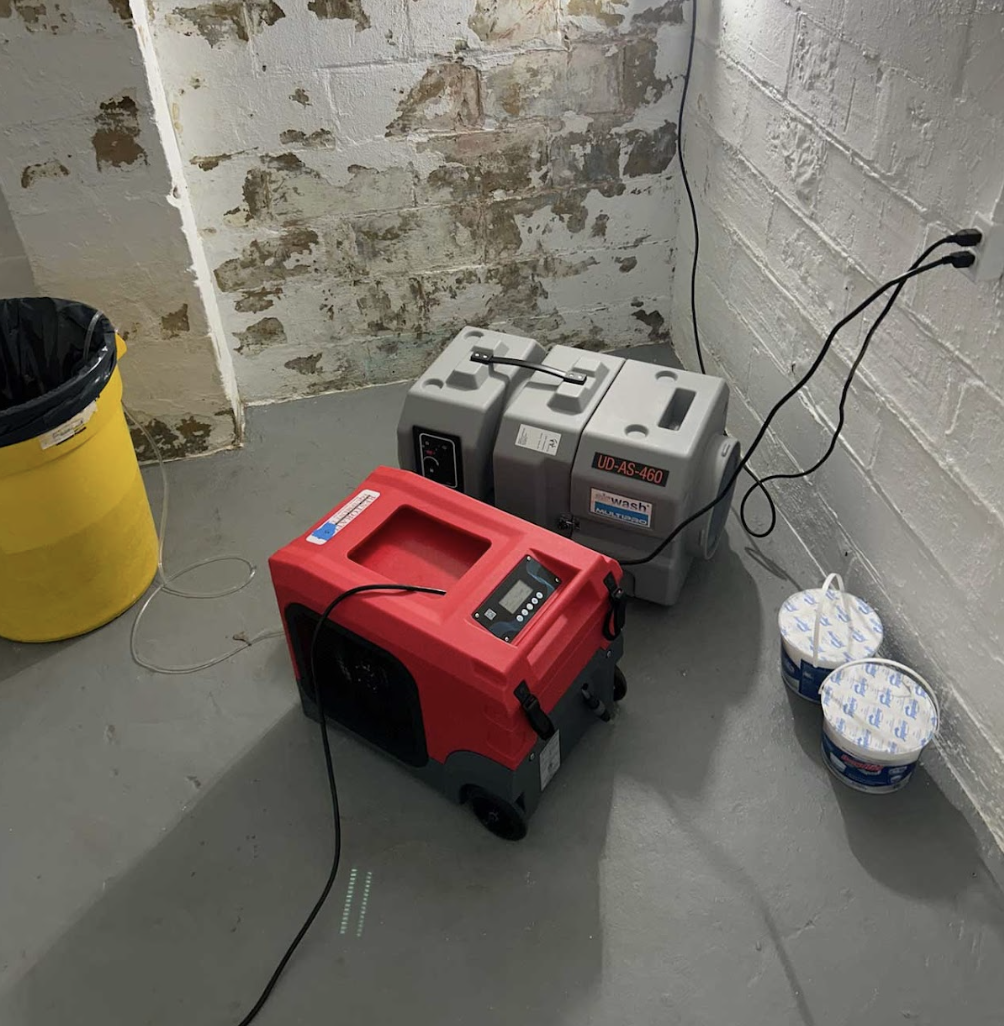
Sometimes a sewage leak clean up involves an outdoor spill in your yard, driveway, or around a septic area, and those situations need a different cleanup approach.
For sewage on soil or grass, keep people and pets away until the area dries and sunlight has time to help reduce germs. Remove solid waste with a shovel, bag it securely, and wash tools afterward. Do not use the area for play or gardening right away, and avoid harvesting produce that contacted sewage.
Keep people and pets off contaminated ground: After an outdoor sewage spill, block access to the area right away. Sunlight and drying can help reduce bacteria over time, but the area should still stay off-limits for about 20 days, especially for children and pets.
Eliminating Odors and Preventing Mold
The smell of a sewage backup is something you never forget. It’s a combination of hydrogen sulfide (that “rotten egg” smell) and the breakdown of organic matter. Even after the liquid is gone, the odor can linger in the air and in the walls.
To eliminate odors, you must control the humidity. We use industrial-grade air movers and dehumidifiers to pull moisture out of the structure. Simply opening a window isn’t enough in the humid Florida climate of St. Petersburg or Clearwater; you need to create a “vortex” of dry air.
Moisture detection is the secret weapon here. We use infrared cameras and moisture meters to find “pockets” of water hidden behind baseboards or under cabinets. If these aren’t dried within 24 to 48 hours, mold will begin to grow. If you notice a musty smell days after the cleanup, you likely need mold remediation. For business owners in Largo or Seminole, commercial mold removal is vital to ensure the safety of your employees and customers.
When to Call Experts for Sewage Leak Clean Up
While a small toilet overflow might be a DIY job, a true sewage backup from a floor drain or a septic failure requires professional intervention.
Why call the pros?
- Certification: Look for IICRC-certified technicians. They follow the S500 and S520 standards for professional water damage and mold restoration.
- Speed: Most professional sewage leak clean up jobs can be completed in as few as 2 days, preventing permanent damage.
- Insurance: We work directly with your insurance company. Documenting the damage and providing a professional “scope of work” is essential for getting your claim approved.
- Specialized Equipment: Ordinary shop-vacs aren’t designed for the viscous, “sticky” nature of sewage. We use specialized extraction systems that sanitize as they work.
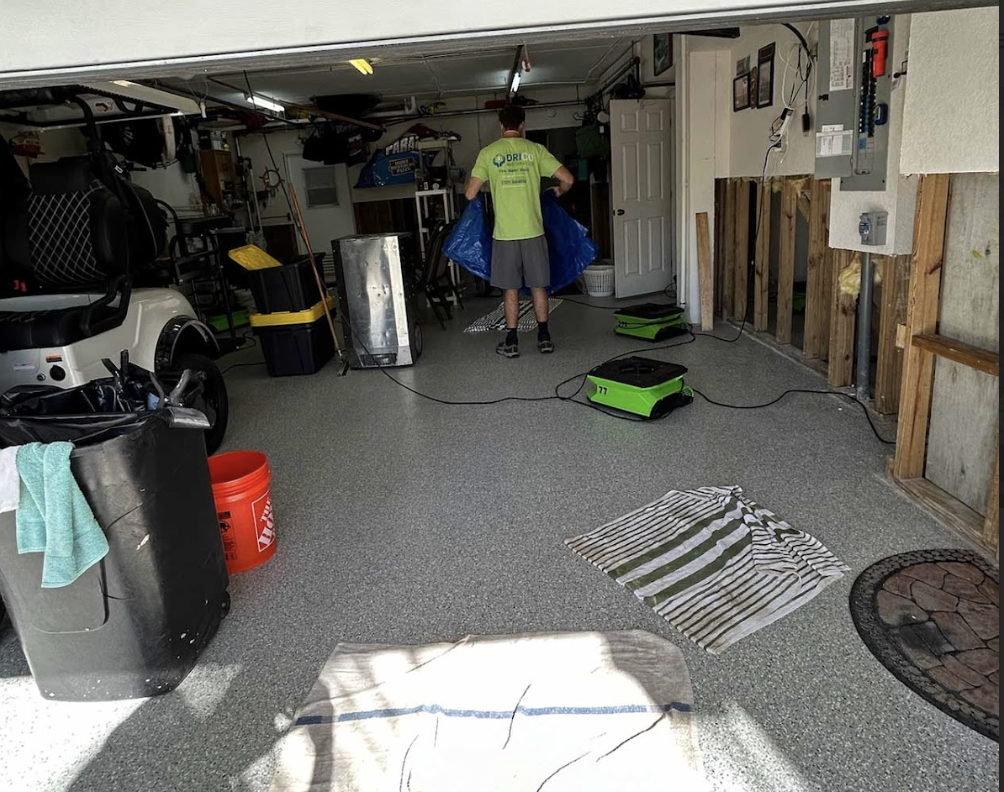
Whether you are dealing with a residential disaster or need commercial water damage restoration, our our team at Drico Restoration is ready to help 24/7.
Professional Restoration and Future Prevention
After the cleanup is finished, your home should look—and smell—better than it did before the leak. In Gulfport and throughout Pinellas County, we pride ourselves on a “Fresh Start” approach, ensuring that your property is fully restored to its pre-loss condition.
However, the best sewage leak clean up is the one you never have to do. Prevention is key to protecting your home in low-lying areas like St. Pete Beach or Treasure Island.
Tips to Prevent Future Sewage Backups:
- Install a Backwater Valve: This one-way valve allows sewage to go out but prevents it from coming back in during a heavy rain or municipal blockage.
- Proper Disposal: Never pour grease or fat down the drain. It hardens in the pipes and creates “fatbergs” that cause backups.
- Tree Root Maintenance: If you live in an older neighborhood like Kenwood, have a plumber inspect your lines for tree root intrusion every few years.
- Sump Pump Battery Backup: Ensure your sump pump has a backup power source so it keeps working during Florida’s frequent summer power outages.
- Know Your System: Understand where your clean-out is located and who is responsible for the “side sewer” (the pipe between your house and the city main).
Dealing with sewage is stressful, but you don’t have to do it alone. From the initial extraction to the final sanitization, we treat your property like our own. If you’re facing a mess right now, check out more info about our services to see how we can help you get your home back to normal fast.
Whether you are in Belleair, Madeira Beach, or anywhere else in Pinellas County, safety comes first. Keep your distance, protect your family, and let the experts handle the dirty work.